
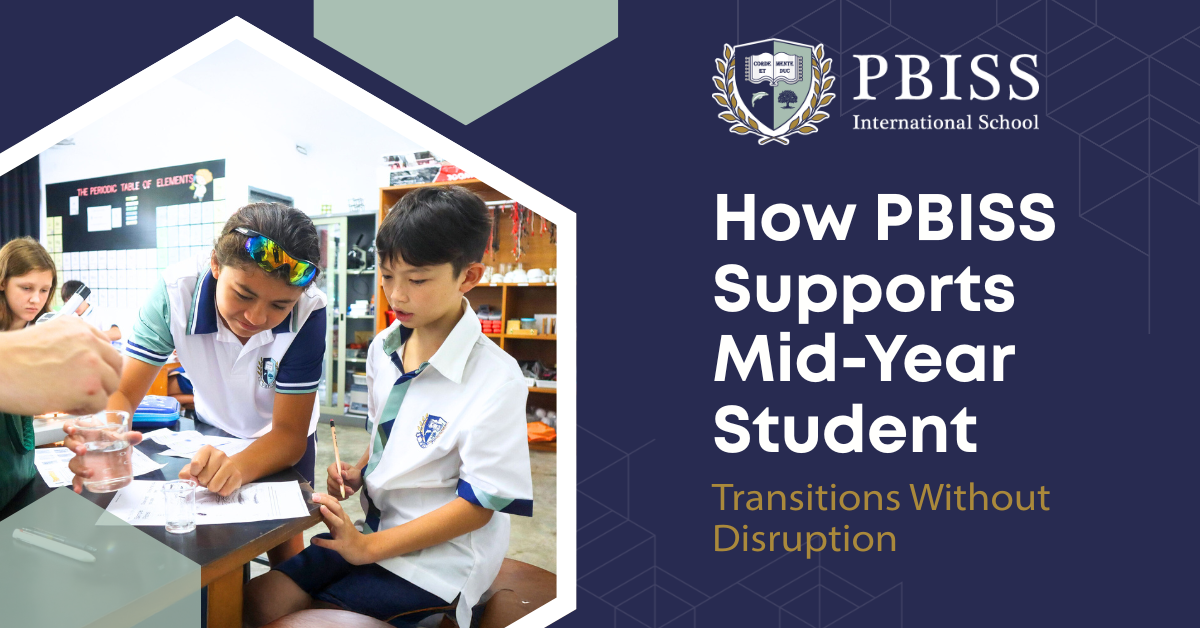
Moving schools mid-year can feel disruptive for children and stressful for parents. New classmates, unfamiliar routines, different academic expectations and a new country or district can all affect confidence, behavior, and academic achievement. At PBISS, the focus is not on promising a flawless transition, but on putting practical structures in place that help students adjust steadily, feel safe, and re-engage with learning as quickly as possible.
Whether a student is joining from elementary schools, middle school, or high schools, PBISS prepares for transition in a way that balances academic priorities with emotional well being.
Establishing structure from the beginning
A smooth start depends less on one perfect first day and more on predictable routines over the first few weeks. PBISS works to establish clear expectations early, so students understand how the school day is organised and how learning happens in class.
Teachers and counselors coordinate to ensure that new students are introduced to:
-
classroom routines and behavior expectations
-
daily schedules and transitions
-
key adults they can approach for support
This structure helps reduce anxiety, limit disruptive behavior, and give students a sense of control in an unfamiliar environment. Research shows that predictable routines and consistent expectations support positive behavior and improve focus, particularly for students entering a new school mid year.
Support that adjusts to the student, not the label
PBISS uses three levels of support to guide how students are helped during transition. These are not rigid tracks, but flexible practices that can change as the student settles.
Universal support applies to all students. Clear behavioral expectations, calm classroom management, and shared language around respect and participation help establish a consistent school culture. Teachers explicitly teach behaviors such as how to ask for help, manage materials, and work respectfully in teams.
Targeted support may be used when a student needs extra help for a short period. This can include academic check-ins, language support through PBISS’s tiered ESL programs, or guidance with planning and organisation. These interventions aim to remove barriers early, before frustration affects attendance or motivation.
Intensive support is available when students require more sustained assistance. This may involve individual planning, counselling support, or wraparound services coordinated between teachers, principals, counselors, and families. Where appropriate, learning strategies or classroom arrangements are adjusted so progress feels achievable rather than overwhelming.
Positive behavioral interventions in everyday practice
Positive behavioral interventions at PBISS focus on teaching behaviors rather than relying on punishment. Students are shown what respectful, prosocial behavior looks like in real classroom situations, from group work to conflict resolution.
When behavior expectations are missed, consequences are explained and linked to choices, with an emphasis on learning and repairing relationships. Discipline is used to support learning and safety, not as an end in itself. This approach helps create a respectful culture where students understand expectations and feel supported rather than singled out.
Keeping learning on track without unnecessary pressure
Joining a new school mid term can create gaps, especially when students move between districts or education systems. PBISS addresses this through light academic review and ongoing feedback, rather than high-pressure testing.
Teachers use available data and classroom observation to decide what needs review and what does not. Support is focused on core skills, subject vocabulary, and curriculum alignment, particularly within the Cambridge framework. At the same time, students with strengths are encouraged to engage in STEM activities, academic excellence clubs, and pathway-focused learning so that a move does not limit future opportunities.
Relationships, belonging, and confidence
Adjustment is not only academic. Students settle faster when they feel they belong. PBISS encourages relationship-building through structured class activities, group work, and co-curricular involvement where students meet peers naturally.
Teachers and counselors pay attention to how students are engaging socially, especially during the first weeks. Building relationships early supports emotional safety, encourages participation, and helps students take academic risks again.
Families as partners, without unrealistic expectations
PBISS involves families from the beginning through clear communication and regular feedback. Parents are informed about how their child is settling, what support is in place, and where consistency at home may help, such as routines around homework or planning.
While alignment between school and home is encouraged, PBISS avoids assuming it will always be perfect. The goal is collaboration, shared language, and realistic involvement that supports the student’s progress over time.
A realistic picture of successful adjustment
A smooth transition does not mean every day is easy. It looks more like:
-
a student understanding classroom routines and expectations within the first weeks
-
steady improvement in confidence, focus, and participation
-
academic gaps being identified and addressed gradually
-
emotional well being supported through trusted adults and clear systems
These outcomes are built through consistent practices, adult involvement, and a supportive school culture, not through promises of instant results.
Planning a mid-year start at PBISS
If you are considering how PBISS helps students adjust smoothly to a new school mid year, the admissions team can guide you through the process. Families are invited to speak with staff, tour the campus, and discuss transition planning in a structured and appropriate way that prioritises student safety and privacy.
These conversations give parents a clear understanding of how PBISS supports new students academically, socially, and emotionally, and how those supports are implemented in everyday school life.